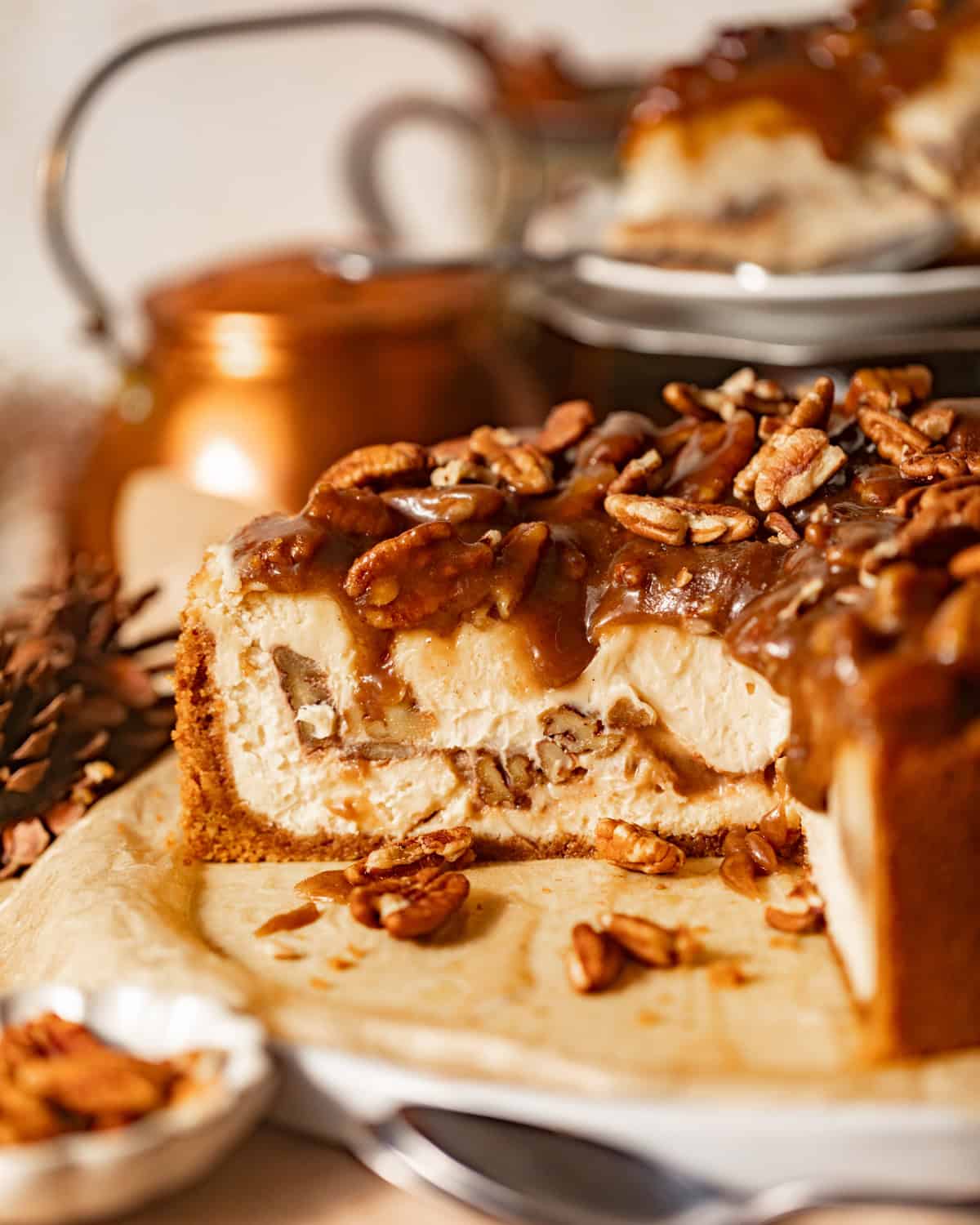
The holiday season often presents us with a delightful, yet challenging, dilemma: choosing between two beloved desserts – the rustic charm of a rich, gooey pecan pie and the sophisticated tang of a creamy, velvety cheesecake. For generations, these two titans have graced our tables, each vying for the coveted "favorite dessert" title. But what if you never had to make that impossible choice again? What if you could experience the very best of both worlds, fused into one spectacular, unforgettable creation? Enter the pecan pie cheesecake, a truly epic dessert that ends the debate once and for all, delivering a symphony of textures and flavors that will captivate every palate.
Imagine a dessert that’s not just a dish, but a showpiece – tall, dramatic, and glistening, drawing every eye at your holiday table. This isn't merely a cheesecake with a few pecans scattered on top; it's a meticulously crafted culinary marvel where the best elements of traditional pecan pie meet the lusciousness of a classic cheesecake. Developed with an unwavering attention to detail, this recipe promises creamy perfection, a crunchy foundation, and a gloriously rich topping that will have everyone asking for another slice. Ready to bake the dessert that will be the talk of the year? Dive into our pro tips for achieving a transcendent Ultimate Pecan Pie Cheesecake: Your Holiday Showstopper.
The Foundation of Flavor: Crafting the Perfect Crust
Every magnificent building needs a strong foundation, and your pecan pie cheesecake is no different. The crust sets the tone, providing a crucial textural contrast and a delicious flavor base that carries the essence of pecan from bottom to top. Forget flimsy, crumbly crusts – we're aiming for a sturdy, buttery, and deeply flavored base.
Beyond Basic Graham Crackers
While graham crackers are the classic choice, our secret weapon for an elevated crust is the addition of finely chopped toasted pecans. Here's why this small detail makes a monumental difference:
- Enhanced Pecan Flavor: By incorporating pecans into the crust itself, you infuse the dessert with that signature nutty warmth from the very first bite. Toasting the pecans beforehand intensifies their flavor, bringing out their natural sweetness and aroma.
- Superior Structure: The natural oils released from the toasted pecans act as a binder, working alongside the butter to create a sturdier, more cohesive crust. This means less crumbling and a base robust enough to support the generous, rich filling and topping without becoming soggy.
- Perfect Crunch: A well-made pecan-infused graham cracker crust offers a delightful crunch that contrasts beautifully with the creamy cheesecake filling.
Pro Tips for Crust Perfection:
- Toast Your Pecans: Don't skip this step! Spread your pecans on a baking sheet and toast in a preheated oven (around 350°F / 175°C) for 5-7 minutes, or until fragrant. Let them cool completely before finely chopping.
- Finely Chop, Don't Grind: You want a fine texture that blends seamlessly with the graham cracker crumbs, but not a paste. Pulsing in a food processor works best.
- Thoroughly Mix and Press: Combine the graham cracker crumbs, chopped pecans, and melted butter until evenly moistened. Then, press the mixture firmly and evenly into your springform pan. Use the flat bottom of a glass or a measuring cup to achieve a compact, uniform layer.
- Pre-bake for Crunch: Pre-baking the crust is non-negotiable. This step locks in the buttery flavor and ensures a crisp, crunchy foundation that won't turn soggy once the cheesecake filling is added. Bake until golden brown, then cool completely before filling.
The Heart of the Matter: Achieving Silky Smooth Cheesecake Filling
The centerpiece of any great cheesecake is its filling, and for this pecan pie cheesecake, we're aiming for nothing less than a rich, yet balanced, and utterly smooth texture. This filling is a symphony of dairy and sweetness, each ingredient playing a vital role in its creamy perfection.
The Essential Ingredients and Their Roles:
- Cream Cheese: The backbone of the cheesecake, providing its signature tang, richness, and creamy body. Opt for full-fat block cream cheese for the best results; avoid spreadable varieties.
- Sour Cream: This often-underestimated ingredient enhances the overall richness while lending an even sharper, more sophisticated tang. It also contributes to the filling's tender texture.
- Eggs: Essential for structure and binding the filling as it bakes. They contribute to the custard-like consistency.
- Sugar: Provides sweetness, balancing the tang of the dairy.
- Dark Brown Sugar: A subtle addition that deepens the flavor profile, introducing a hint of molasses that beautifully complements the pecan notes. This is a nod to the rich depth found in traditional pecan pie.
- Vanilla Extract: Adds a gentle warmth and aromatic complexity, rounding out all the flavors.
The Secret to Creamy Perfection: The Water Bath
To guarantee the dessert's signature velvety texture, the pecan pie cheesecake is baked gently in a water bath, also known as a bain-marie. This technique is absolutely crucial and makes all the difference between a dry, cracked cheesecake and one that is perfectly smooth and luscious.
- How it Works: A water bath surrounds your springform pan with steam and regulates the heat. This gentle, even cooking ensures the cheesecake bakes slowly and consistently at a low temperature.
- Prevents Cracking: The consistent moisture from the steam prevents the top surface from drying out and cracking, which is a common cheesecake woe.
- Promotes Even Cooking: It ensures the custard-like filling cooks uniformly from the edges to the center, resulting in that desirable smooth, melt-in-your-mouth texture.
Pro Tips for a Flawless Filling:
- Room Temperature Ingredients: Ensure your cream cheese, eggs, and sour cream are at room temperature. This is paramount for achieving a lump-free, perfectly smooth batter without overmixing.
- Don't Overmix: Mix only until just combined. Overmixing incorporates too much air into the batter, which can cause the cheesecake to puff up excessively during baking and then collapse and crack as it cools.
- Perfecting the Water Bath Setup: Wrap the outside of your springform pan tightly with several layers of heavy-duty aluminum foil to prevent any water from seeping in. Place the foil-wrapped pan into a larger roasting pan, then carefully pour hot water into the roasting pan until it comes about halfway up the sides of the springform.
This meticulous approach to the filling ensures that every slice of your Pecan Pie vs. Cheesecake: Why This Delicious Fusion Wins the Debate is an unparalleled delight.
The Art of Patience: Cooling Your Pecan Pie Cheesecake to Perfection
You've mastered the crust and achieved a silky filling. Now comes one of the most critical, yet often overlooked, stages: cooling. Patience here is not just a virtue; it's a necessity for a perfect, crack-free pecan pie cheesecake. Sudden temperature changes are the archenemy of cheesecake, causing it to crack, sink, or even collapse.
The Gradual Cooling Process:
To prevent thermal shock and allow the delicate custard to adjust without stress, we cool the cheesecake in stages:
- In the Oven, Door Ajar: Once the cheesecake is baked (it should still have a slight wobble in the center), turn off the oven and prop the door open about 4-6 inches. Let the cheesecake cool in the gradually decreasing heat of the oven for 1 hour. This gentle transition helps prevent drastic temperature drops.
- At Room Temperature: After its oven cool-down, carefully remove the cheesecake from the oven and the water bath. Remove the foil from around the springform pan. Let it cool completely on a wire rack at room temperature for another 1-2 hours, or until the pan feels cool to the touch. This allows the internal temperature to normalize before refrigeration.
- In the Refrigerator: Finally, once at room temperature, transfer the cheesecake (still in its springform pan) to the refrigerator. Chill for a minimum of 6-8 hours, or ideally overnight. This extended chilling time is crucial for the cheesecake to firm up completely, set properly, and develop its full flavor and creamy texture. Attempting to slice it too early will result in a messy, unset dessert.
Pro Tips for a Flawless Finish:
- Resist the Urge to Peek: Opening the oven door repeatedly during baking or the initial cooling phase can introduce drafts and cause cracking. Trust the process!
- Clean Slicing: For impeccably clean slices once chilled, run a sharp, thin knife under hot water, wipe it dry, and then make each cut. Repeat this process for every slice.
The Grand Finale: Crafting the Irresistible Pecan Caramel Topping
The crowning glory of your pecan pie cheesecake is its glossy, crunchy, and utterly addictive pecan caramel topping. This layer delivers the quintessential "pecan pie" experience, marrying deep caramel notes with toasted nuttiness, creating an exquisite textural and flavor contrast with the creamy cheesecake beneath. Getting this topping just right is where precision truly pays off.
The Science of Soft-Set Caramel:
The perfect caramel topping isn't too hard, nor too runny. It needs to cling beautifully to the cheesecake, offer a satisfyingly gooey bite, and be easy to slice. This requires hitting a very specific temperature:
- The Thread Stage (224°F / 107°C): The mixture of sugar, cream, butter, and corn syrup must simmer gently until it reaches precisely 224°F. At this "thread stage" in candy making, the sugars have fully dissolved and concentrated just enough to create a sauce that will set softly without turning brittle.
- Why Temperature Matters:
- Too Hot: If the caramel gets much hotter (e.g., to the firm ball stage), it will become too hard and difficult to slice once cooled, creating an unpleasantly stiff topping.
- Too Cool: If it doesn't reach 224°F, the caramel will remain too thin and runny, slipping off the cheesecake instead of blanketing it beautifully. It won't have the desired sticky, gooey consistency.
- A Candy Thermometer is Your Best Friend: This is not a step to eyeball. A reliable candy thermometer is essential for accuracy, ensuring your caramel reaches the perfect consistency every time.
Incorporating the Pecans:
Once your caramel hits that sweet spot of 224°F, remove it from the heat and stir in your toasted pecans. This timing ensures they are evenly coated in the warm, ready-to-thicken sauce. As the mixture cools slightly, the sauce will naturally thicken to that perfect gooey consistency, ready to be draped generously over your chilled cheesecake.
Pro Tips for Topping Success:
- Toast Pecans (Again!): Just like the crust, ensure your pecans for the topping are freshly toasted and cooled. This amplifies their flavor and crunch.
- Prepare Ahead: Have all your topping ingredients measured and ready before you start cooking the caramel, as the process moves quickly once it's on the stove.
- Cool Before Topping: Ensure your cheesecake is thoroughly chilled and firm before adding the warm caramel topping. This prevents the cheesecake from melting and helps the caramel set properly on top.
- Even Distribution: Gently spread the pecan caramel mixture over the top of the chilled cheesecake, allowing some of the luscious caramel to drip enticingly down the sides.
This celebratory dessert – abundant, golden, and glistening – truly embodies everything a holiday showpiece should be. It speaks to pecan pie lovers and cheesecake fans alike, uniting both in one unforgettable, creamy, crunchy, and utterly delicious slice. Embrace these pro tips, and you'll bake a pecan pie cheesecake that earns its place as the star of any gathering, leaving a lasting impression of decadent perfection.
